
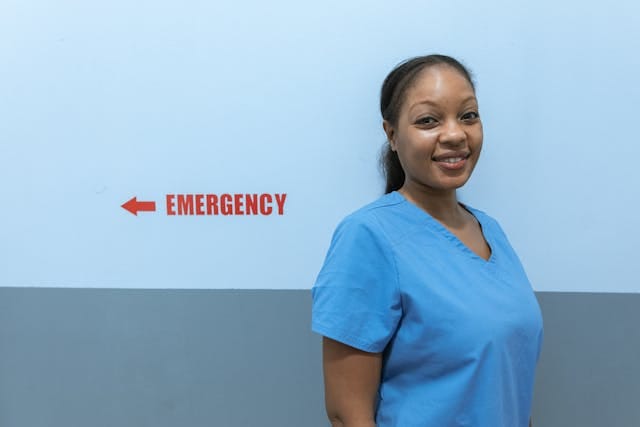
Starting your career as a nurse is both exciting and overwhelming. While you’ve spent years studying, the real test happens when you’re on the floor, and an emergency hits. Developing sharp readiness skills early on makes you a better clinician and gives you the confidence to stay calm when every second counts.
The demand for these skills is higher than ever. According to the BLS, employment for registered nurses is projected to grow 5% through 2034, which is faster than the average for most jobs. With about 189,100 openings expected every year, many early-career nurses will be on the front lines. This makes it vital to master emergency protocols from day one.
In this article, we’ll discuss the essential life-saving techniques and mentorship models that help new nurses thrive in high-pressure situations.
Master Basic Life Support and Advanced Cardiac Life Support
For new nurses, keeping Basic Life Support (BLS) and Advanced Cardiac Life Support (ACLS) certifications up to date is essential. These certifications form the core of effective responses to cardiac and respiratory emergencies, but earning them is only the first step. Regular simulation training is what builds the muscle memory needed in real-life crises.
The NIH reports that in-hospital cardiac arrest affects about 1.2% of adult patients. Although only 25.8% are discharged alive, most survivors, around 82%, have good neurological outcomes, showing how much timely, well-coordinated care matters. Strengthening outcomes depends on guideline-driven care and a reliable chain of survival.
Frequent practice with chest compressions and emergency algorithms helps make responses automatic. When actions become second nature, nurses can focus more clearly on patient assessment and team coordination. Understanding the “why” behind each step, rather than just memorizing sequences, ensures you can adapt when situations don’t follow the textbook.
Develop Rapid Assessment Skills
In emergencies, the ability to quickly and accurately assess a patient’s condition is critical. Early-career nurses must develop systematic assessment techniques that can be performed swiftly without missing crucial details.
The ABCs, Airway, Breathing, Circulation, provide a reliable framework, but experienced emergency nurses learn to integrate additional observations simultaneously. Train yourself to notice skin color, work of breathing, level of consciousness, and vital sign trends within seconds of entering a room.
Practice performing focused assessments that prioritize life-threatening conditions over comprehensive documentation. Developing this skill requires intentional practice during routine patient care, where you consciously work to streamline your assessment process. Over time, pattern recognition develops, allowing you to identify subtle changes that signal deterioration before a full-blown emergency occurs.
Master Effective Communication During High-Stress Situations
Clear communication is vital during emergencies when teams must coordinate quickly. New nurses should master tools like SBAR (Situation, Background, Assessment, Recommendation) until they become second nature.
During a crisis, use closed-loop communication, where you repeat back instructions, to prevent dangerous misunderstandings. It is also important to know when to speak and when to listen. New nurses sometimes hesitate to voice concerns, fearing they’ll look incompetent, but patient safety depends on your observations.
Practice assertive communication that is respectful yet clear. Additionally, projecting a calm voice, even if you feel anxious, stabilizes the team and prevents panic from spreading to patients and families.
Learn Through Mentorship and Clinical Experience
While textbook knowledge is a start, nothing replaces the wisdom of those who have seen it all on the floor. This is where mentorship becomes your greatest asset. A clinical rotation preceptor is an invaluable guide as you transition from student to practicing nurse. These experienced mentors provide the real-world context that books lack, showing you how to apply knowledge in unpredictable moments.
Finding the right mentor is a key part of the journey. According to ClickClinicals, the timeline for matching with a preceptor depends on your specific program requirements, location, and specialty. Once you submit a rotation request, it serves as the roadmap for finding a placement that fits your career goals.
To maximize this opportunity, ask your preceptor to walk you through their decision-making during emergencies. Actively seek feedback and request to observe urgent situations. The habits you form during your preceptorship will shape your practice for years, making this relationship foundational to your emergency readiness.
Prioritize Emotional Resilience and Stress Management
Technical skills are only half the battle. You also need to manage the emotional weight of trauma and grief. Without proactive stress management, the psychological toll of emergencies can lead to burnout.
According to a recent survey on Yahoo!, 65% of nurses report high levels of stress. Additionally, 67% of student nurses are already worried about their future workloads. Yet, despite these hurdles, 82% of students remain excited about their careers.
To stay resilient, develop healthy boundaries and coping mechanisms. Use brief mental resets during shifts and process your emotions afterward through peer debriefing or journaling.
The goal isn’t to become hardened, but to manage your stress responses so you can provide excellent care without sacrificing your mental health. Acknowledging the emotional impact of the job is the first step in building a long, sustainable career.
Build Medication Knowledge for Emergency Situations
Emergency medications are high-risk and time-sensitive, leaving no room for error in a crisis. Nurses must move beyond memorizing doses to truly understand mechanisms of action and administration techniques for drugs like epinephrine and amiodarone.
However, knowledge gaps are a real concern. A study by Sage Journals tested nurses on pharmacology and medication management, finding a mean score of only 66%. Alarmingly, many struggled with the basics. Only 38.9% correctly answered questions on opioids, and 45.5% couldn’t distinguish between agonists and antagonists. This insufficient knowledge directly threatens patient safety.
To bridge this gap, familiarize yourself with your facility’s crash cart and create quick-reference cards. Never administer an unfamiliar drug without verification; a few seconds of confirmation can prevent a fatal mistake. Investing time now to master these high-stakes medications will make your response intuitive and protect your patients when every second counts.
Frequently Asked Questions
What skills do you need to be an emergency nurse?
Emergency nurses need rapid assessment and critical thinking skills, strong clinical judgment, and advanced life support knowledge. Clear communication, teamwork, and emotional resilience are essential for high-stress situations. They must also stay calm under pressure, adapt quickly, and manage complex patient needs safely and efficiently.
What should I do if I freeze during my first emergency situation?
Freezing is a normal stress response, especially early in your career. Take a deep breath, fall back on your training, and don’t hesitate to ask for guidance. Debrief afterward with your preceptor or colleagues to process the experience and prepare for next time.
How can I practice emergency skills when my unit doesn’t have frequent emergencies?
You can practice emergency skills through regular simulation drills, mock codes, and skills labs. Review protocols, medication algorithms, and case studies during downtime. Shadow rapid response teams when possible, seek mentorship, and mentally rehearse scenarios during routine care to build confidence and readiness.
Building emergency readiness is a journey that blends technical skill with emotional strength. By mastering BLS/ACLS protocols, sharpening your assessment skills, and leaning on the guidance of a clinical preceptor, you create a solid foundation for your career. Remember that effective communication and medication safety are just as critical as chest compressions.
While the stress of the job is real, prioritizing your resilience ensures you can provide high-quality care without burning out. Stay curious, keep practicing, and trust that with every shift, your ability to save lives becomes more instinctive.