
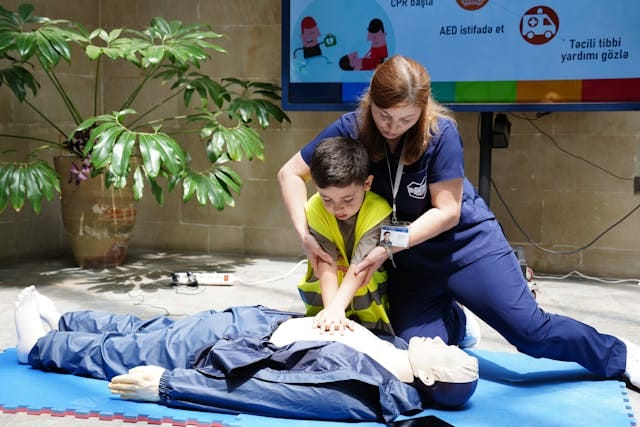
Long-term care facilities provide daily support for residents who often depend on others for both medical and personal needs. These settings can include individuals with chronic conditions, limited mobility, or age-related health changes that require close attention.
It is estimated that around 70% of Americans aged 65 and older need long-term care at some point in their life. This care can be offered by family caregivers or service providers. Regardless of who provides it, care is usually required, especially as the body ages.
Even simple activities, such as moving from a bed to a chair or walking to a dining area, can carry hidden risks. Because of this, staff readiness plays a key role in maintaining both safety and confidence throughout the facility.
CPR training helps caregivers feel prepared for unexpected medical events while also reinforcing a broader culture of awareness and responsibility. This preparation supports calmer responses during stressful moments and encourages staff to approach daily care with greater focus and care for resident well-being.
Understanding Risk in Long-Term Care Settings
A Springer Nature Link study notes that care facilities usually house around 20% of residents with heart failure risks. Using a grounded theory approach, researchers conducted online interviews with twenty staff members in Northern Ireland to examine their experiences, challenges, and strategies.
The findings showed that staff often received limited training focused on acute care rather than long-term management. They also faced mixed levels of clinical support when making care decisions and encountered communication challenges when working with residents and families.
These factors increase the chance of sudden medical emergencies. Staff who understand early warning signs can respond faster and more effectively. Quick action can reduce complications and support recovery.
Daily routines also affect overall safety. Hydration, mobility support, and medication schedules play a role in preventing emergencies. CPR training often sharpens awareness of these details. This awareness can improve the quality of care across each shift.
The Role of Leadership in Safety Planning
Strong leadership shapes how a facility approaches resident safety. Families often look for signs that a care team values training and preparedness. Clinical leaders set expectations for how staff respond during critical moments. Their guidance can influence how training programs are developed and maintained.
Most care providers hire nurses with varied specializations and skills based on different requirements. For instance, most residents of long-term care facilities are elderly with health problems. Therefore, both businesses and families prefer staff with a Master of Science in Nursing (MSN) in Adult-Gerontology Primary Care (AGPC).
According to Spring Arbor University, nurses with this degree are trained to manage chronic disease and complex care needs of older adults. This background allows them to guide care teams with a strong focus on long-term health planning.
Thus, professionals who hold an MSN-AGPC degree have the right educational background and have developed skills useful in long-term care. Their background in adult and geriatric primary care allows them to assess resident risks with a broader view. This perspective supports training programs that reflect real health patterns seen within the facility.
Communication With Families and the Community
Families want to feel secure about their loved one’s care. Staff who can explain emergency readiness often build stronger trust. Open conversations about training and safety plans can ease concerns. This transparency creates lasting relationships with residents and their families.
Community reputation also benefits from a clear focus on safety. Facilities known for strong training practices often stand out. This visibility can support long-term growth and community partnerships.
The partnership between staff and family is essential in long-term care facilities. A study identified two main dimensions of partnership, which are interpersonal and environmental. It also found seven key attributes: relationships, information sharing, shared decision-making, professional competence, negotiation, involvement in care, and shared responsibility.
The study concluded that partnership is an ongoing and dynamic process shaped by both personal interactions and care settings. Facilities can schedule workshops or CPR training programs for family members, too. This will allow seamless interactions between staff and family members in a controlled environment, facilitating trust and partnership.
Building Team Coordination Through Training
Team coordination is essential in any healthcare setting to offer enhanced experiences to patients and residents. This coordination is typically led by a designated health or social worker who manages care plans with a multidisciplinary team. Technology devices and electronic health records can help facilitate collaboration. Limited time, gaps in training, and fragmented communication often make teamwork difficult in practice.
A qualitative study examined the factors that influence teamwork in nursing homes. The analysis highlighted five connected determinants, with “investing in each other” as the central theme. Other factors included clear team roles, written care policies for residents, regular verbal coordination meetings, and broader organizational influences.
In long-term care facilities, people work in different departments and rarely have time to get to know one another. CPR training can bring staff from different roles together.
Nurses, aides, and support staff learn how to communicate during stressful moments. Clear roles reduce confusion when time is limited. This teamwork often improves how staff interact during regular care tasks as well.
Strong coordination can also improve morale. Staff members feel supported when they know others understand their role. This sense of unity can lead to better job satisfaction. Over time, it may reduce turnover and support stable care teams.
Frequently Asked Questions
How often should long-term care facilities update their emergency response policies?
Emergency response policies should be reviewed at least once a year or whenever new regulations, equipment, or care standards are introduced. Updates also make sense after a major incident or inspection. Regular reviews ensure procedures reflect current resident needs, staffing levels, and available medical resources within the facility.
What role does technology play in improving emergency readiness in care facilities?
Technology can support emergency readiness through digital training platforms, electronic health records, and alert systems. These tools help staff access resident information quickly and track training completion. Automated reminders can also prompt recertification or drills, enabling facilities to maintain a consistent level of preparedness across all shifts.
How can facilities tailor training programs for residents with cognitive impairments?
Facilities can adjust training scenarios to account for residents who have dementia or other cognitive conditions. This may include practicing gentle communication methods, learning safe redirection techniques, and understanding how stress responses differ in these residents. Staff benefit from learning how to balance safety with emotional comfort.
CPR training plays a central role in shaping safety and care quality within long-term care facilities. It supports faster response, stronger teamwork, and clearer communication. These benefits reach beyond emergency moments and influence daily routines.
When leadership, training, and staff coordination work together, residents often experience better outcomes. Families also gain peace of mind from seeing a facility that values preparation. Over time, this focus helps create a safer and more supportive environment for everyone involved.