
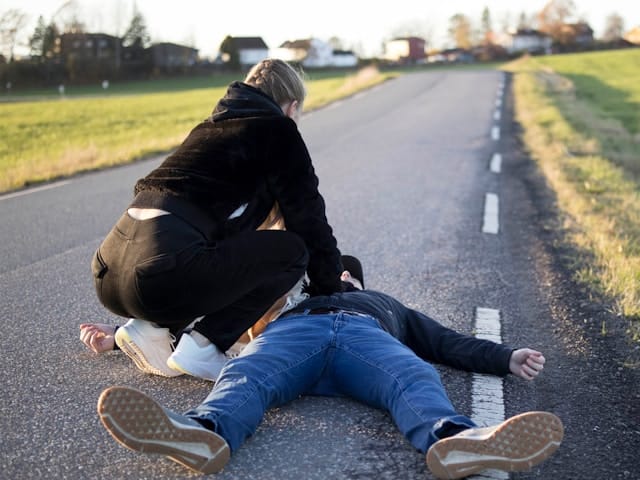
Being an adult isn’t just about managing a career or a household. It involves being prepared for the unexpected. You may never know when a colleague or a family member will collapse. In those seconds, your actions determine the outcome.
Emergencies rarely come with warning signs or perfect conditions. They test how prepared you are, not how well you planned. In those moments, basic life-saving knowledge becomes the difference between waiting and acting. That responsibility becomes clearer when you look at how adults actually respond during emergencies.
Knowing how to perform CPR and basic first aid is a fundamental social responsibility. It transforms you from a panicked bystander into a capable rescuer. This literacy in emergency response is the most valuable skill you can possess today.
CPR Knowledge Is Becoming a Baseline Skill, but Gaps Still Exist
You may feel willing to help during an emergency, but willingness alone doesn’t equal readiness. Many adults hesitate because they fear doing harm or making a mistake.
According to the American Heart Association (AHA), a 2025 survey conducted by the AHA and Decision Analyst found a clear rise in CPR confidence. The online study included 1,266 U.S. adults aged 18 to 80. Results show a 6-point increase in bystander confidence since 2023.
This translates to over 17.5 million more adults who feel ready to act during cardiac emergencies. Such confidence usually comes from knowing clear, repeatable steps during high-pressure emergencies. You learn how to assess responsiveness, call for help, and start chest compressions with proper depth and rhythm.
For many adults, this exposure sparks a deeper interest in healthcare because it reveals how impactful immediate care can be. Some even realize they have a natural talent for clinical work and want to switch their careers. Those with any bachelor’s degree can pursue accelerated nursing programs online as a second degree to transition into professional care quickly.
Elmhurst University reveals that recipients can complete such programs in as few as 16 months, gaining the essential skills to provide direct patient care. This path lets you save lives as a full-time career. Even if you never pursue more training, CPR knowledge gives you the confidence to act when it matters.
What Really Happens When Bystanders Act or Don’t
You might assume survival depends only on paramedics and hospitals. However, the initial minutes decide outcomes.
When CPR starts early, oxygen continues to reach the brain. Without it, permanent injury can begin within minutes. This isn’t only about survival; it also affects the recovery quality. WFYI reports that doctors are becoming increasingly concerned about cardiac arrests in young athletes.
Physicians note these events are being seen more often during routine sports activities, even among teens with no known heart conditions. Many collapses happen during practice or competition, where peers and coaches are the first witnesses.
Experts stress that immediate CPR and fast AED use on-site often determine whether the athlete avoids severe brain injury and long-term disability. Clinical evidence supports this concern, as a 2025 PubMed-reviewed study reports that out-of-hospital cardiac arrest affects apparently healthy adults under 40.
The incidence ranges from about 4 to 14 cases per 100,000 person-years. Survival to hospital discharge remains low, at roughly 16%, highlighting the impact of early bystander CPR. When no one intervenes, outcomes worsen quickly.
These moments rarely come with warning. They occur during ordinary activities and around people who know the victim. While athletes draw attention to the risk, these emergencies aren’t limited to sports settings. CPR training prepares you for that reality. It helps you act before fear or confusion takes over, which can change a life’s trajectory.
Why Adult Emergencies Are Rising in Everyday Settings
Cardiac emergencies are no longer confined to hospitals or advanced age groups. Many occur during daily routines at work, in stores, or at home. According to CNBC, more than 10,000 cardiac arrests happen in U.S. workplaces each year. Seven in ten Americans say they feel powerless during a cardiac emergency at work.
Experts warn that many workplaces remain unprepared, leaving coworkers as first responders without proper CPR or AED training. CNBC also highlights the partnership between the American Heart Association and ADP. The goal was to embed CPR and emergency training into workplace systems that employees already use.
This effort helped narrow the preparedness gaps and normalize life-saving skills at work. These workplace efforts matter because many cardiac risks develop quietly during everyday adult routines. Sedentary routines, chronic stress, and undiagnosed heart conditions all play a role.
Long work hours and limited physical activity add strain that often goes unnoticed. As a result, emergencies can happen without prior warning signs. This shift makes CPR and first aid more relevant for every adult.
Training prepares you to respond while professional help is still on the way. It also helps you use available tools, like AEDs, correctly and without delay. Readiness must match the environments where emergencies now occur.
Training Builds Decision-Making Under Pressure
You may worry about freezing during an emergency. That concern is common and valid. Training addresses it by turning complex situations into simple sequences. You practice steps until they feel familiar and manageable. This structure reduces panic and improves response speed.
Research published in AHA Journals shows that bystander CPR can double or even triple survival chances during out-of-hospital cardiac arrest. The study notes that hesitation is a major barrier in workplaces, where coworkers are often the first witnesses.
Compression-only CPR is emphasized because it lowers fear and speeds up action. The same report points to inaccurate CPR portrayals on scripted television as a hidden problem. Many shows even depict outdated steps, such as pulse checks or rescue breaths, which are no longer required for adults.
These portrayals can confuse viewers and delay real-world action. Clear training helps replace those mixed signals with correct, current steps employees can follow under pressure. First aid training adds another layer of readiness. You learn how to control bleeding, manage shock, and help during choking incidents.
These skills apply across many workplace situations, not just cardiac arrest. Preparedness means having a plan when stress peaks. Training gives you that plan, so your decisions remain focused when seconds matter.
People Also Ask
1. Can CPR be effective if you aren’t physically strong?
Yes, CPR can still be effective even if you lack upper-body strength. Proper technique relies more on body positioning than force. Training teaches you how to use your weight, maintain correct posture, and deliver consistent compressions without exhausting yourself quickly.
2. Will I be held legally liable if I accidentally break someone’s ribs while performing CPR?
You’re protected by Good Samaritan laws in all fifty states. These laws shield lay rescuers from legal liability when they provide emergency care in good faith. Even if a rib breaks during compressions, you cannot be successfully sued. The legal system encourages you to act without fear.
3. Is performing hands-only CPR really as effective as using mouth-to-mouth rescue breaths?
Hands-only CPR is remarkably effective for adults because their blood contains enough oxygen to sustain organs for several minutes after collapse. By focusing solely on hard, fast chest compressions, you maintain blood flow to the brain more consistently. This simplified method is often preferred by responders during stressful incidents.
CPR and first aid are not abstract concepts learned once and forgotten. You may never need them, but their value lies in readiness. When you know what to do, you protect more than yourself. You protect family members, coworkers, and strangers nearby. Every adult carries that responsibility, whether planned or not.