
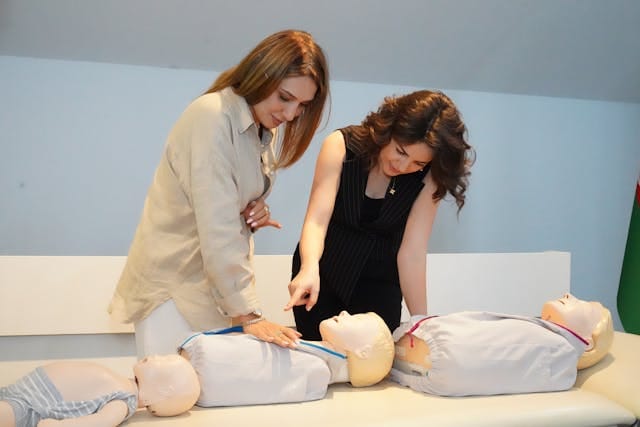
In a cardiac emergency, muscle memory and confidence can mean the difference between life and tragedy. Many people leave CPR certification feeling prepared and empowered. However, research shows these life-saving skills are perishable without reinforcement.
Compression depth, proper tempo, and decision-making can fade within six months. In real emergencies, stress and adrenaline amplify uncertainty. Without regular practice, hesitation or incorrect technique can be as dangerous as having no training at all.
In this article, we’ll explain why one-time training fails, examining skill decay, mental readiness, and the importance of current guidelines for real emergency preparedness.
Skills Fade Without Practice
CPR is a hands-on skill that relies heavily on muscle memory, timing, and confidence under pressure. Without regular practice, trained individuals may forget compression depth, rhythm, or hand placement, causing delayed or ineffective responses during emergencies. Stressful, real-world conditions further increase the risk of errors when skills are not reinforced.
A study published by ScienceDirect found that volunteers involved in a structured emergency response plan retained CPR skills for up to 12 months. However, skill retention declined across all groups after one year when six-month refresher tests were not conducted. This reinforces how quickly CPR abilities fade without ongoing practice.
Emergency Guidelines and Best Practices Change
CPR techniques and emergency response guidelines continually evolve with advances in medical research and survival data. Regular refreshers keep responders aligned with current best practices. Staying updated reduces the risk of outdated or incorrect actions during critical, life-threatening moments.
For example, updates may adjust compression depth, rescue breathing recommendations, or the use of automated external defibrillators (AEDs). These changes are based on evolving medical research and survival data. Regular refresher training ensures responses follow current evidence and improve patient survival outcomes.
The American Heart Association notes that CPR guidelines were first published in 1966 to establish consistent training and response standards. Since then, the guidelines have been regularly reviewed and updated. While typically revised every five years, formal updates are issued sooner when new scientific evidence demands changes in best practices.
How Advanced Training Strengthens CPR Leadership
Advanced training is essential for developing confident CPR leaders, which is why experienced healthcare professionals often lead CPR education. Their clinical expertise helps translate guidelines into practical action. This background supports effective decision-making during high-stress, real-world emergencies.
Advanced clinical training strengthens situational awareness, team coordination, and the ability to adapt CPR techniques to patient needs. Nursing education emphasizes evidence-based practice and continuous skill reinforcement. This foundation helps professionals respond confidently and lead effectively during emergencies.
Institutions such as Rockhurst school of nursing programs can help develop skilled leaders grounded in resuscitation science. These professionals understand the value of regular refreshers. They actively promote ongoing CPR training, ensuring teams stay prepared, current, and effective during emergencies.
The Master of Science in Nursing–Leadership program prepares nurses for advanced leadership roles. The MSN-Leadership degree focuses on developing transformative leaders. Graduates are equipped to excel across diverse clinical and organizational healthcare settings.
Real-World Emergencies Are Unpredictable
Cardiac emergencies rarely happen in controlled or ideal conditions. They can occur at home, in public spaces, or at work, often without warning and under intense stress. Noise, crowds, limited space, or emotional pressure can interfere with decision-making, making well-rehearsed CPR skills essential. Regular refreshers help responders adapt techniques quickly when conditions are less than perfect.
Data from the American Red Cross shows that nearly 70% of out-of-hospital cardiac arrests happen in homes. In these settings, professional medical help is often delayed. This reality underscores why frequent CPR practice is essential for confident, effective action during real-world emergencies.
Improving Outcomes in Workplaces and Communities
Regular CPR refreshers improve readiness in workplaces and communities by turning bystanders into confident first responders. Up-to-date skills help shorten response times before emergency services arrive. This is vital in offices, schools, gyms, and public venues. Routine training builds a safety culture and helps save lives.
CNBC reported that more than 10,000 people experience cardiac arrests in US workplaces each year. These incidents often occur without warning. Having employees trained and regularly refreshed in CPR can significantly improve immediate response. Workplace preparedness directly influences survival outcomes.
Creating a Culture of Ongoing Preparedness
Building a culture of ongoing preparedness means treating CPR training as a continuous responsibility rather than a one-time requirement. Regular refreshers normalize readiness, reinforce confidence, and ensure individuals feel capable of responding without hesitation. When organizations and communities prioritize ongoing training, emergency response becomes faster and more coordinated.
This culture also encourages shared accountability, where people look out for one another’s safety. By embedding CPR refreshers into routine safety practices, preparedness becomes instinctive. Ultimately, these consistent efforts significantly improve outcomes when real-world emergencies arise.
Frequently Asked Questions
Does CPR training differ for adults, children, and infants?
CPR training differs significantly for adults, children, and infants, focusing on depth and technique. Infant CPR utilizes gentler two-finger compressions, while adult procedures require full hand strength. These adjustments in hand placement and compression-to-breath ratios ensure safety across all ages.
Who should prioritize CPR refreshers the most?
Healthcare professionals, caregivers, teachers, and fitness staff must prioritize CPR refreshers. Those with high public interaction benefit most from regular practice. Consistent training ensures quick, confident responses during sudden medical emergencies, keeping both the public and workplace environments safe.
Do CPR skills differ by area or healthcare structure?
CPR core techniques are globally standardized, but guidelines vary by region or healthcare system. These differences include training frequency and legal requirements. Such variations reflect local healthcare infrastructure, population needs, and regulatory standards to ensure the best possible emergency response.
Staying Ready to Save Lives When It Matters Most
Regular CPR refreshers transcend mere compliance; they represent a vital commitment to preparedness, confidence, and tangible real-world impact. Because skills naturally fade and medical guidelines constantly evolve, ongoing training remains essential for responders.
This practice ensures individuals possess the mental clarity to act without hesitation during unpredictable crises. By reinforcing best practices and fostering a culture of readiness, refreshers maximize survival rates. Ultimately, these sessions save lives when every second counts.